In the latest installment of our interview series with the Rosco Digital Imaging team, Jo Riddell discussed with us how Rosco collaborates with production designers and art departments. The following conversation has been edited for length and clarity.
PDC Coordinator Madison Kloeber: When are you typically brought onto a production?
Jo Riddell: Every project is completely different, so it really depends on the requirements of the job.
If we're commissioned to create bespoke backdrops, we could be involved in the first week that the production designer and supervising art director start on the job. Generally, for something like that, the earlier the better.
On the other hand, if it's a rental backdrop or something that we already have in our stock, it could be a matter of weeks before the shoot. It really depends on the scope of the project. No two projects are alike.
PDC: Can you give an example of two projects with very different starting points?
Jo Riddell: We've had several projects where we're involved from the very beginning, with the production designer working out the set requirements and commissioning photography. All of that needs to be built into quite a long timeline.
Wuthering Heights would be a good example. We were involved very early on and did a location scout with the team up north. It was a distant location, so there was quite a bit of travel involved, and then we came back to shoot it at a later point. That was a project where we were involved very early and there was a lot of planning.
On the other end of the spectrum, sometimes someone will phone us because they're shooting a commercial in two weeks and need something like a standard New York skyline that we already have in our stock. In that case, everything can happen very quickly using assets that we already own.
PDC: Once Rosco is involved, what does that collaboration look like from the art department's perspective?
Riddell: Generally, on a project that goes well, there's a lot of communication and sharing of information. We get the best out of each other when there's that kind of exchange.
Several members of the Rosco team have worked in art departments, so we understand drawings, stage space and health and safety. That means we can advise on the best way to use our products and get the best results.
There's usually a lot of sharing of references, planning and logistics. If photography is involved, there's a lot of back and forth. Once artwork is being generated, it can be adapted, changed and enhanced to suit what the designer wants.
Because we've worked on so many different shapes and forms of backdrop, we can advise on everything from lighting and spacing to sizing. The earlier we're involved, the more useful that experience can be, because we can draw on examples from previous projects to help a designer decide which direction they want to take.
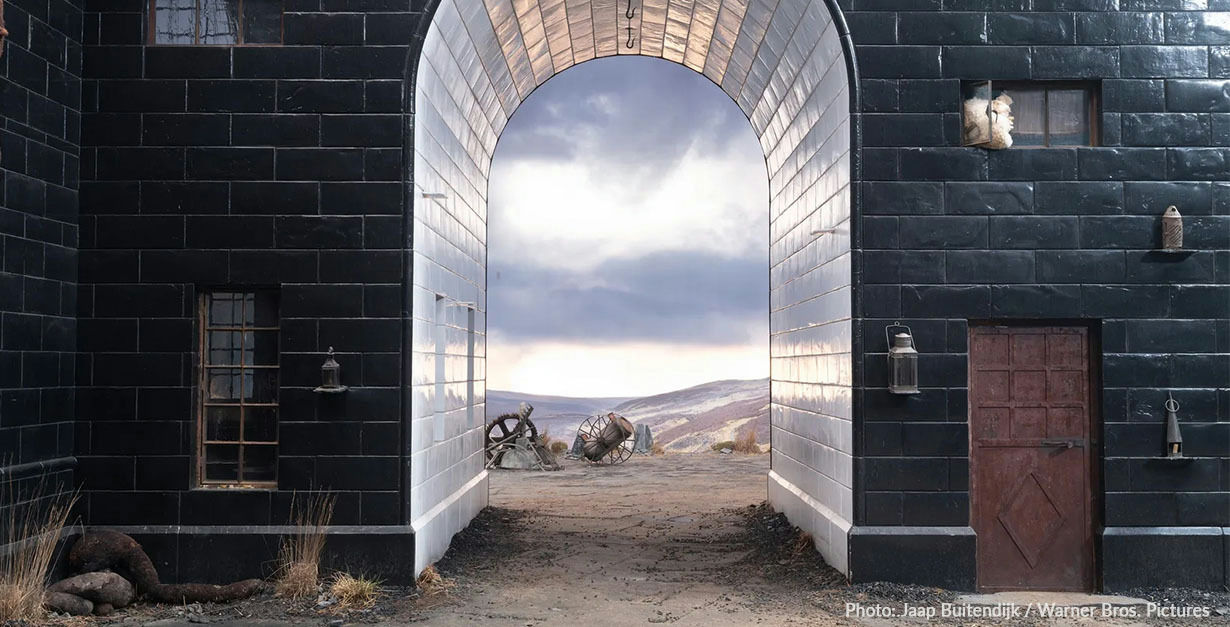
Rosco Day/Night SoftDrop installed inside the Wuthering Heights set. Production design by Susie Davies. Image sourced from Rosco Spectrum blog.
PDC: What happens when a designer has an idea that presents a technical challenge?
Riddell: It's quite rare that anything is simply a "no." There are some things that are more difficult or complicated because there are things our products just aren't designed to do.
For example, we sometimes get inquiries about whether our products can be placed outside or withstand weather elements. The products we sell at the moment aren't really designed for that, but we can advise on the best way to solve those issues.
Sometimes there's a journey to get to the point that they're trying to reach, but usually we can solve most things.
PDC: You've worked on both sides of this process before joining Rosco. How has that experience shaped the way you approach these collaborations?
Riddell: One project that I was involved with as a supervising art director before I joined Rosco, was Tetris, which was designed by Daniel Taylor. We involved Rosco very early in the production, which took place during COVID when travel was limited.
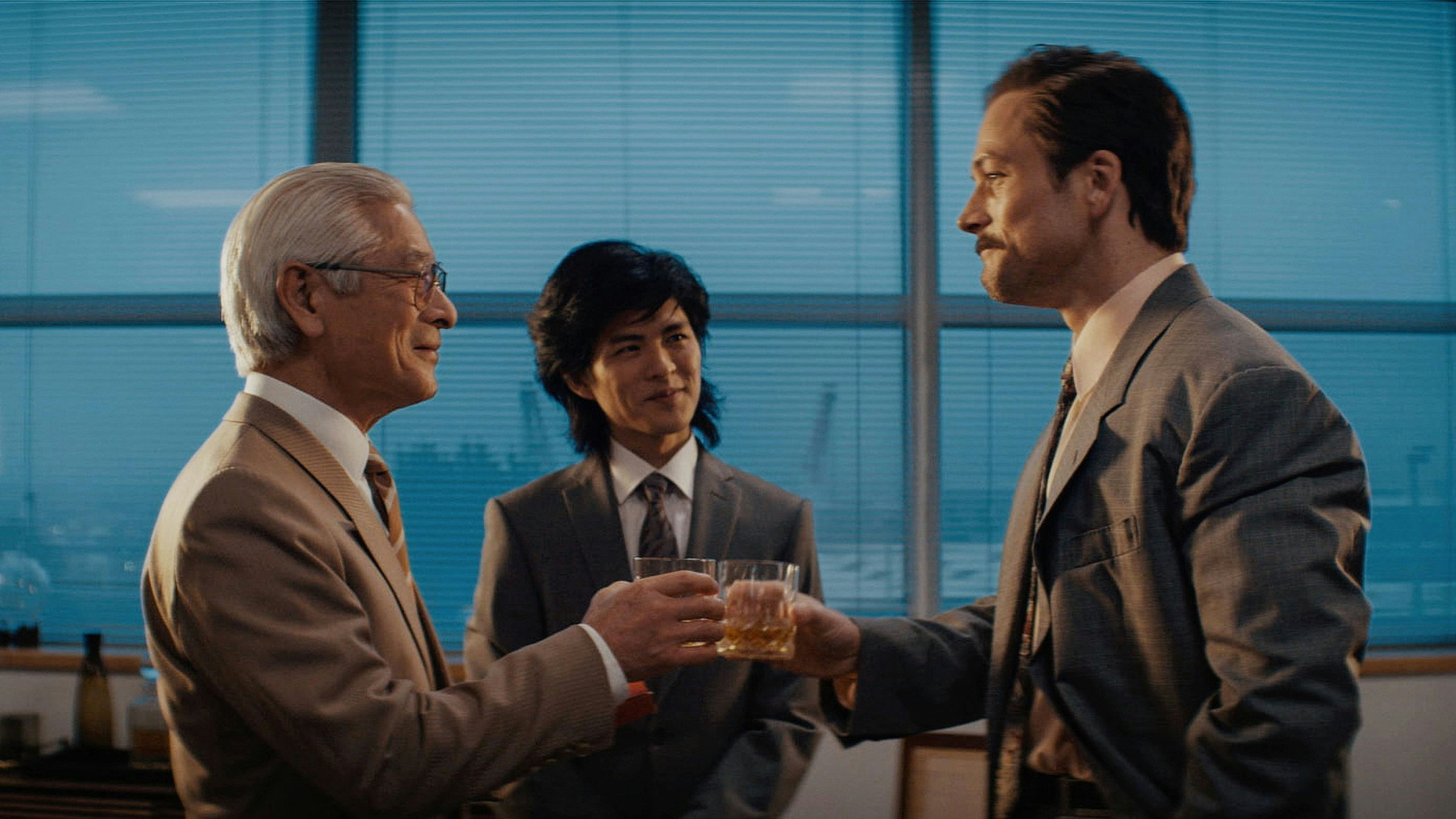
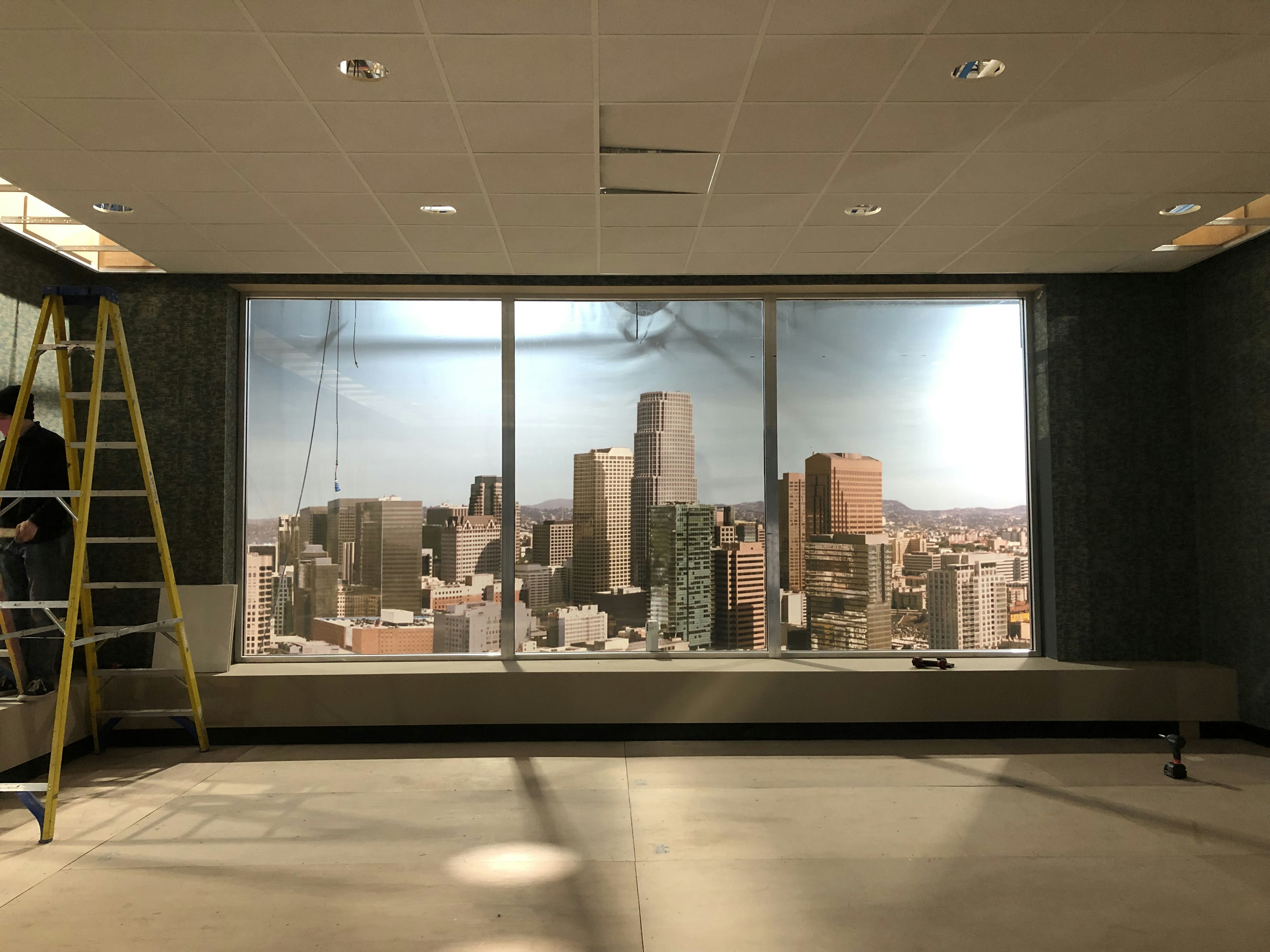
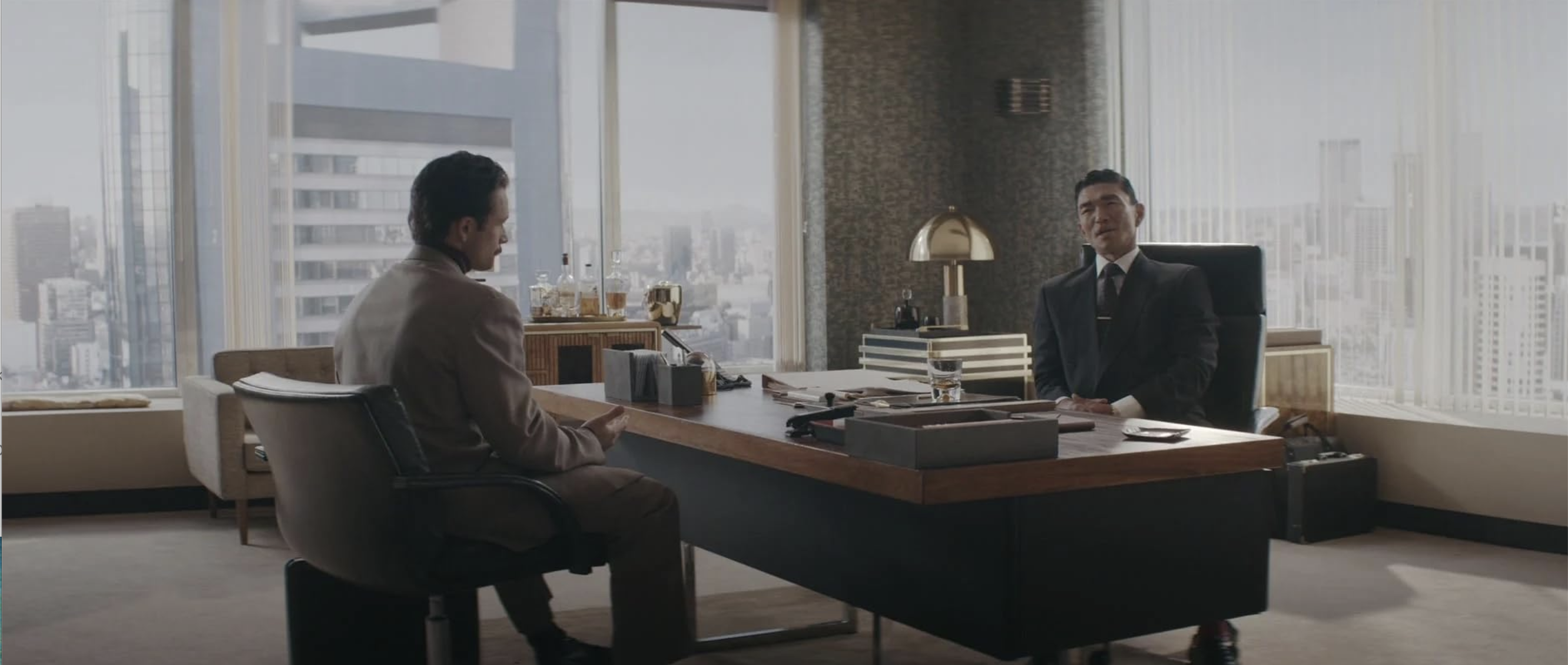
The show was set in all kinds of far-flung places, with scenes in Tokyo and Russia, and it was also a period production. There were several challenges to overcome, but we were able to put together some fantastic backdrops through Rosco's digital library, which has been compiled over the last 30 years.
We used images from cities all over the world to build new images from scratch using different elements from the stock photography. No travel was needed.
There was a lot of research involved on Rosco's side, as well as back and forth between the art department and Rosco to settle on the design of the images. Then the images had to be built properly.
The timeline was quite long, but it was amazing to be able to draw on that resource when the world had essentially shut down and it was impossible to travel.
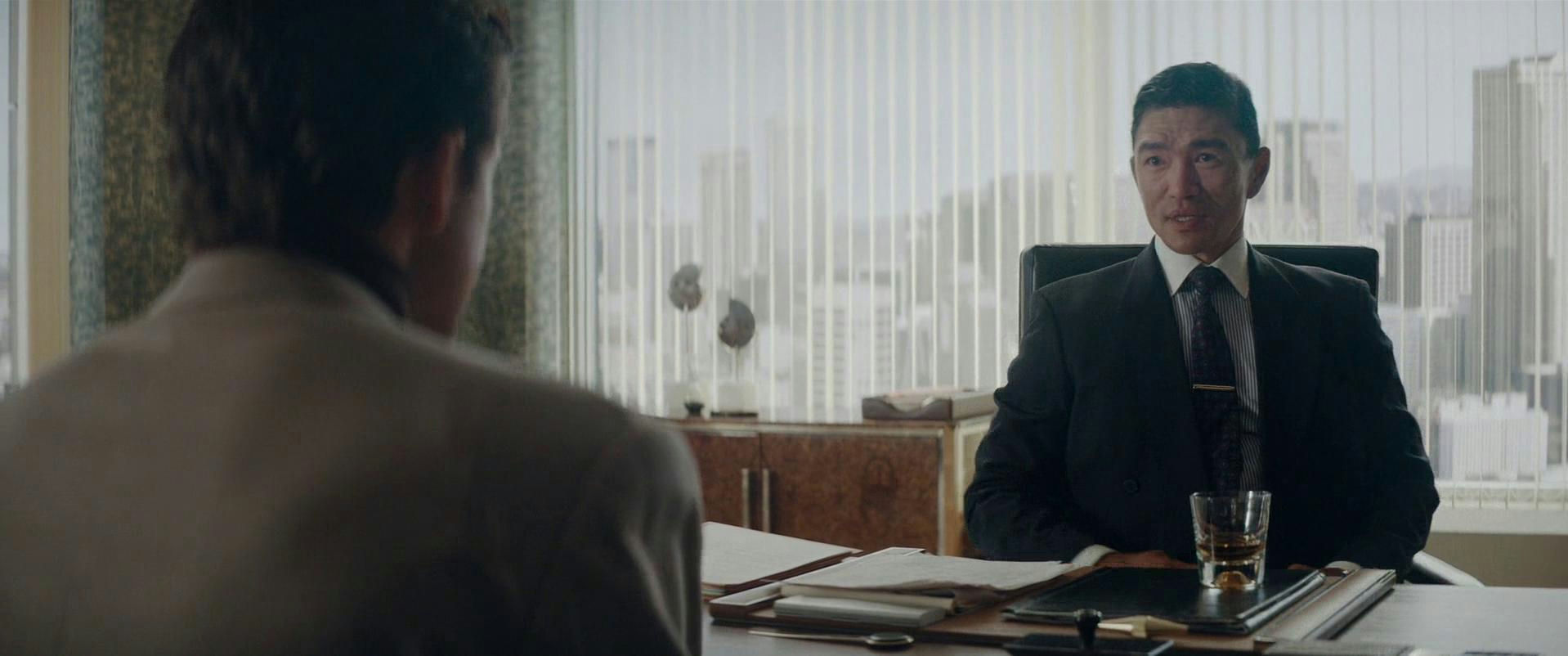
An interior set for Tetris with skyline views created by the Rosco Digital Imaging team. Behind-the-scenes image courtesy of Rosco. Production design by Daniel Taylor.
PDC: How does the amount of time available affect what's possible creatively?
Riddell: There's always a finite point where everything has to come together.
Another example of a really challenging project is when it's the middle of summer, photography gets commissioned, and then the request is that the image needs to look like the middle of winter.
We get a lot of that, and we don't shy away from it. We've done some amazing work where we've turned summer scenes into snow, taken leaves off trees or added leaves to trees. But ultimately, it comes down to the amount of time we're given to do it.
It's a bit like when you're a scenic painter painting a set. If you're given two hours to do it, it's never going to be as good as if you've got three days to do it.
The more time available, the better. That's the message I'd give to any art department: involve us as early as possible, because you ultimately get closer to what you want that way.
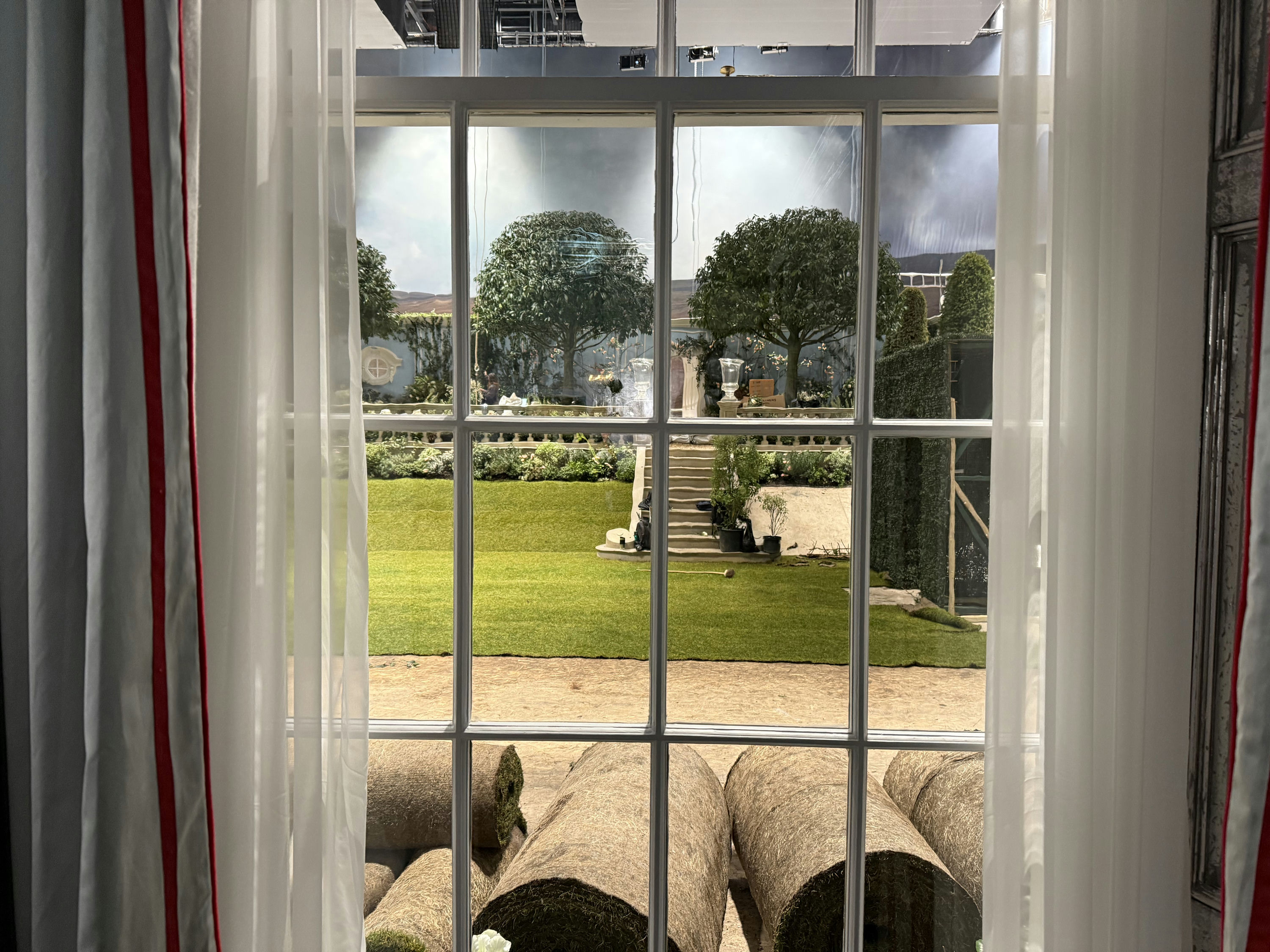
Rosco Day/Night SoftDrop installed inside the Wuthering Heights Thrushcross Grange set. Production design by Susie Davies. Image courtesy of Rosco.
PDC: What production challenges can a backdrop help solve?
Riddell: Some of the biggest challenges productions face are always related to the schedule, which is governed by things like cast availability and locations in far-flung places.
When you bring a set back onto a stage, you give the production a whole load of control back because, by using a backdrop, you're not reliant on shutting down huge, expensive locations and controlling them.
You're also able to shoot all times of day during the day on a stage, rather than having to go to night shoots. There are a lot of benefits that can come from bringing a set back onto a stage and using a backdrop.
PDC: What would you most want production designers to take away from working with Rosco?
Riddell: The earlier we're involved, the better. It's quite a specific thing, backdrop photography, and there are a lot of ways to maximize what you can get out of it.
If we're part of the conversation early enough, we can help work through the creative and practical considerations together rather than trying to make something work at the very end of the process.