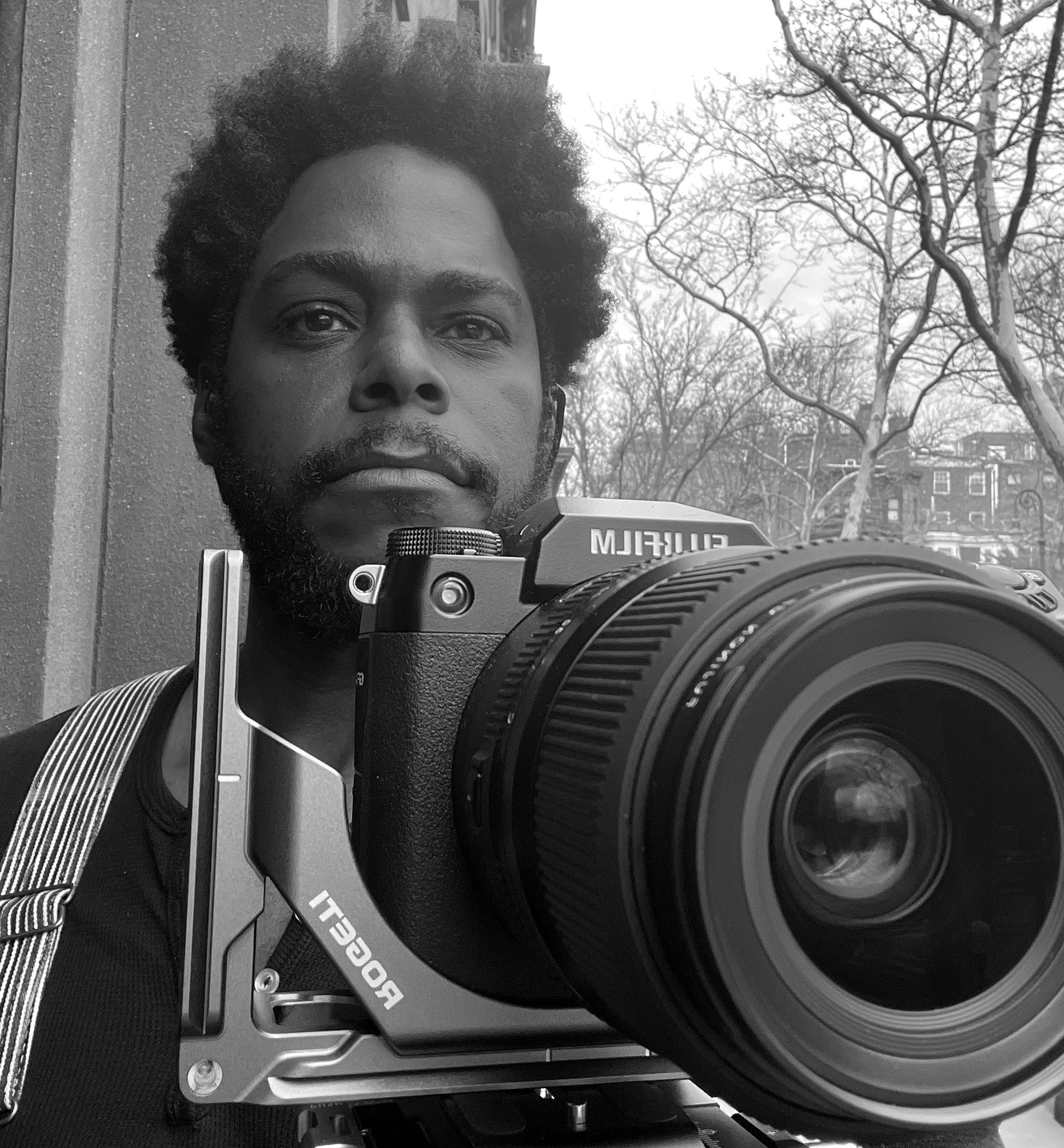
Marttise Hill is an award-winning film producer, director and a creative specialist at Rosco Digital Imaging (RDI). He's produced four films that premiered at the Sundance Film Fest: The Vacation, Feathers, How to Tell You're a Douchebag and Cronies. At his core, he loves helping artists find solutions to their creative challenges. When not creating backdrops or films, Marttise enjoys playing golf wherever he can.
Marttise Hill chats with the PDC team about Rosco’s SoftDrop products, building relationships with production designers and recent installations including Spike Lee's Highest 2 Lowest designed by Mark Friedberg.
PDC Coordinator Madison Kloeber: Could you tell us a little bit about your role and what drew you over to scenic backdrops?
Hill: I started out on the lighting side of Rosco as the East Coast sales rep for Film and TV. A year ago I joined the RDI team full-time as a creative specialist. My work now is about building relationships with art directors and production designers, while still fostering relationships with gaffers, key grips and cinematographers to boost awareness and generate sales.
I've always been a fan of the RDI team, especially Phil Greenstreet, who leads the U.S. creative photography unit. I am most excited about the photography side, because I do have an artistic and film production background, primarily as a producer and cinematographer. Adding landscape photography to my role and responsibilities at Rosco seemed like a fun adventure.
PDC: When you're talking about Rosco’s end-users, is there a kind of production that benefits the most from SoftDrops?
Hill: Anybody who has a need for location work but faces budget limitations, or any productions where green screen is on the table for consideration could be good customers for SoftDrop—even productions using LED walls. Historically, we've printed these images on vinyl, and now cotton, but we also have the capabilities for those images to be used on LED walls as some productions embrace the virtual production workflow. So, anybody who is considering recreating a real location on a studio set is a great customer for Softdrop and the RDI images.
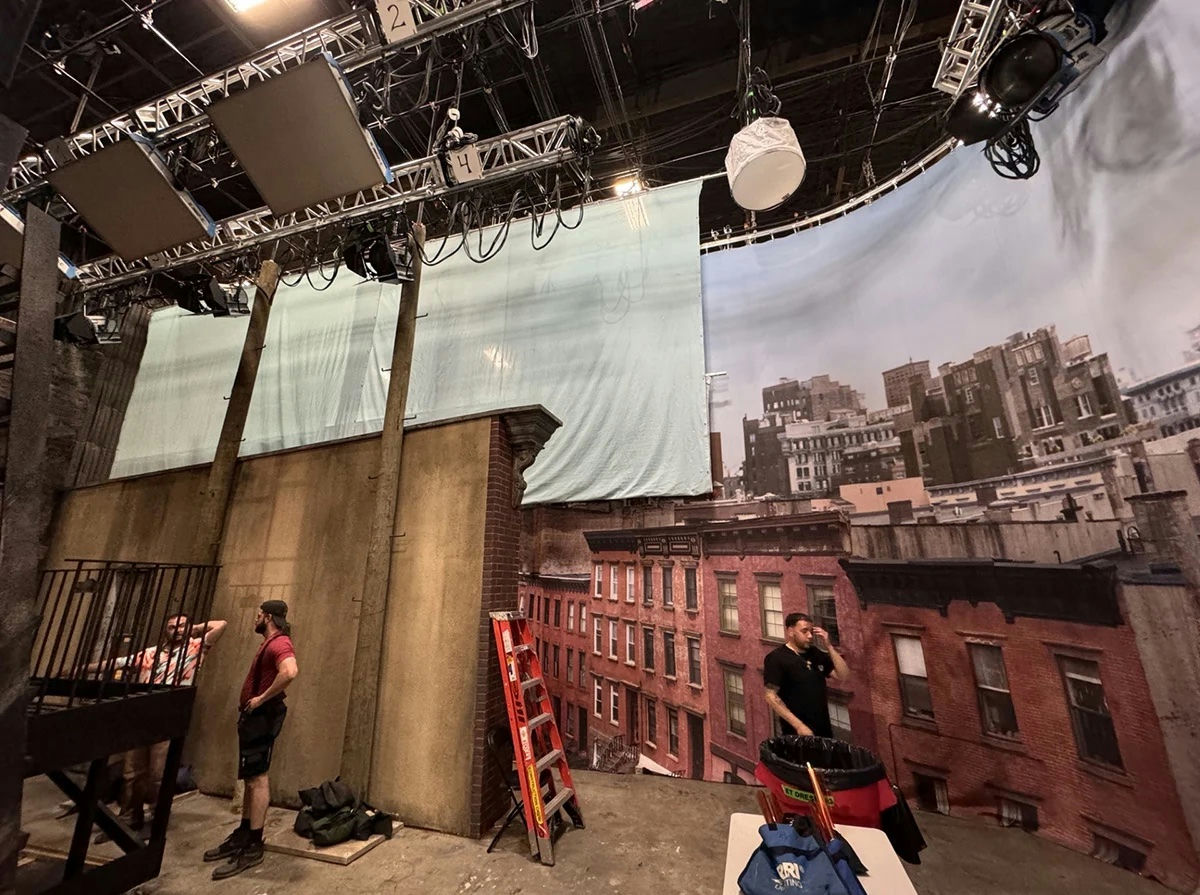
Bob Dylan’s apartment set designed by François Audouy for A Complete Unknown featuring Rosco SoftDrop and hard scenery elements. Sourced from Rosco Spectrum Blog. (Photo/François Audouy)
PDC: For our readers who might not be familiar with SoftDrops, could you explain how it differs from a traditional backdrop?
Hill: SoftDrops are images printed on cotton, as opposed to traditional backings or what some may know as translights, where the image is printed on vinyl or some plastic equivalent.
Historically, with the vinyl drop that had a Day/Night image, to get the night to shine or to illuminate without flipping the backdrop around, you needed a significant amount of lighting to push light through the vinyl.
Whereas with SoftDrop, you don't need as many lights to illuminate the image for it to be believable as a location. For Day/Night images, you can actually use LED panel lights on the ground pointed directly up, maybe about two feet from the drop, and the windows in the night image will illuminate through the front. That way you have less energy consumption on set and the set is not as warm for talent. If you're using a vinyl drop, the temperature of the set will go up because you have so many lights on emitting heat and warming up the plastic.
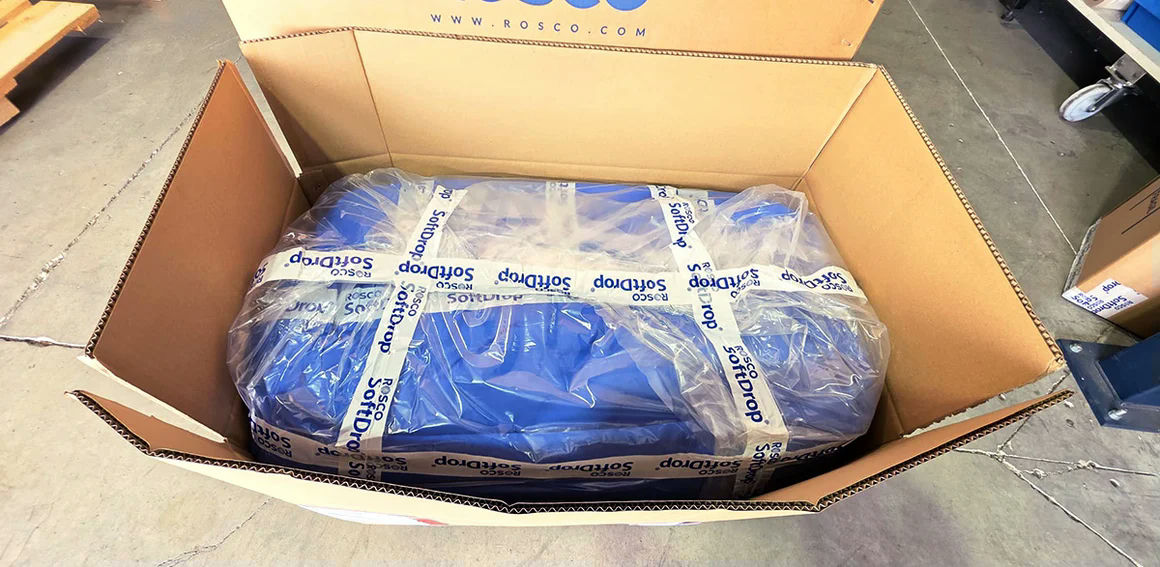
Also, sizing and the way we’re able to ship the backdrop is different from a traditional vinyl drop. By printing it on cotton, we can fold the drop up like a t-shirt or bedsheets and ship it via regular mail: FedEx, UPS, any of the air transport services.
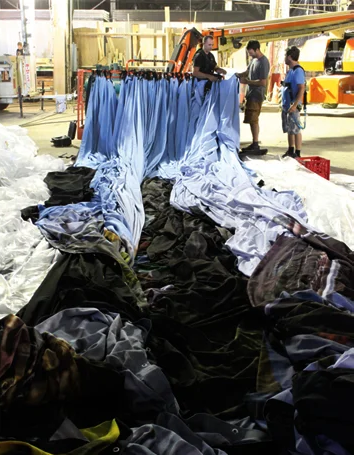
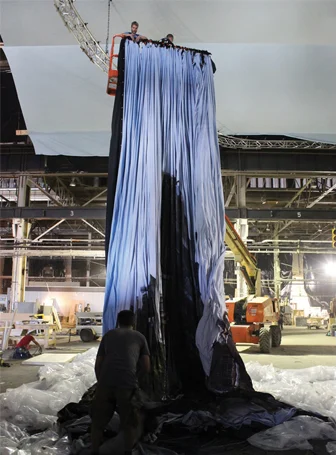
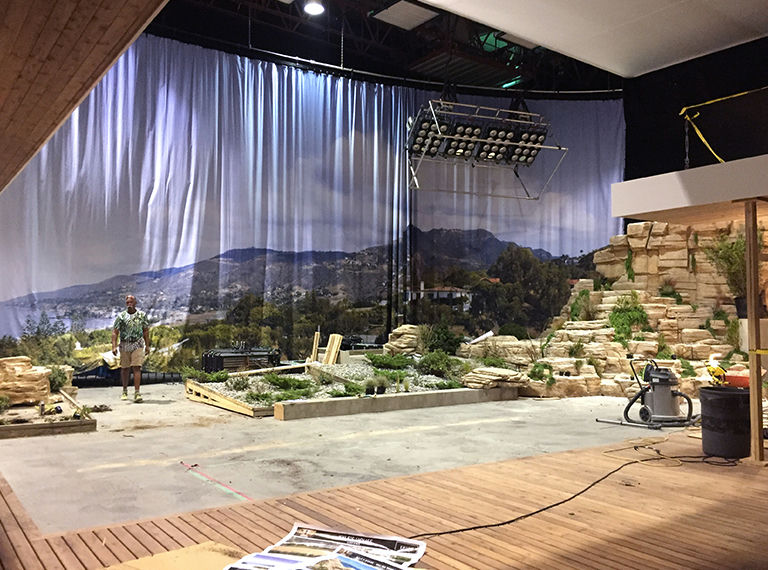
Unboxing and installation of a Rosco SoftDrop. Clockwise from top left: A Rosco SoftDrop arrives folded inside packaging; the SoftDrop is rigged to a curtain track; beginning to hang the drop; the backdrop continues to hang, allowing wrinkles to naturally release before use. (Photo/Rosco Spectrum Blog)
PDC: What exactly happens when the drop arrives on set and it's being installed?
Hill: When the SoftDrop arrives, it will be packaged in a box versus a tube, and the grips will typically be the ones to unpack it, lay it out and inspect it. We encourage them to inspect it before rigging just to make sure that everything is correct. The art director and production designer will probably come take a look as well to make sure what they signed off on is correct.
Depending on the set or the stage, they will rig the drop to a curtain track or some type of truss system that will allow the wrinkles that may be there from the folding process to start to fall out. They'll hang it as early as possible, check on it and maybe use it for some camera tests.
Once it's up, we do recommend that they pull it as taut as possible on the sides and from the bottom just to help pull the wrinkles out. When the drop is needed for shooting, we recommend that they pull it taut again for the scenes that are being shot with the drop on camera.
PDC: What is something that production designers are surprised to learn about making or installing drops?
Hill: Sometimes production designers and art directors are surprised about the scale of the drops. Another unique thing to SoftDrop is that for a single-time-of-day image we can do 32ft tall by 170ft wide with no seams. Most competitive drops have seams every 16ft, but we can give you a continuous image up to 170 feet if it’s a single time of day image.
If you want it to be a Day/Night SoftDrop, the size cuts down to around 120 feet with no seams. Even still, that's a remarkable option to have for production because that makes the job of the cinematographer easier. They're not having to worry about: “Oh, there's a seam in this window. We need to reposition the drop.”
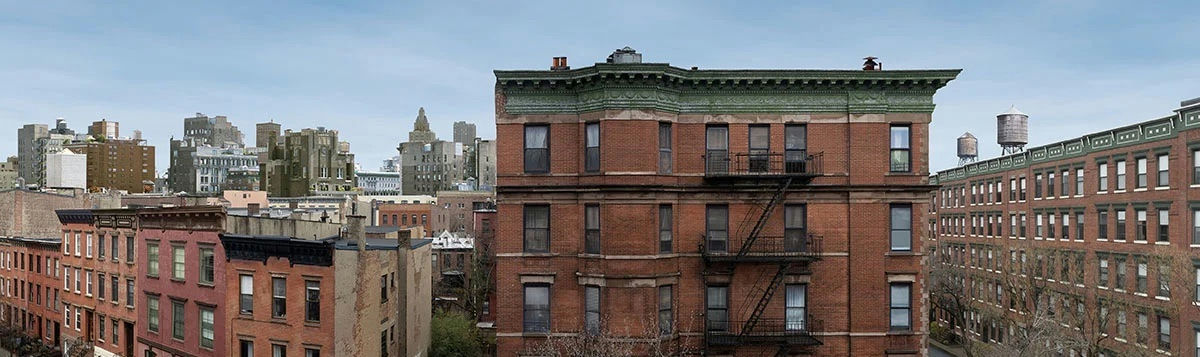
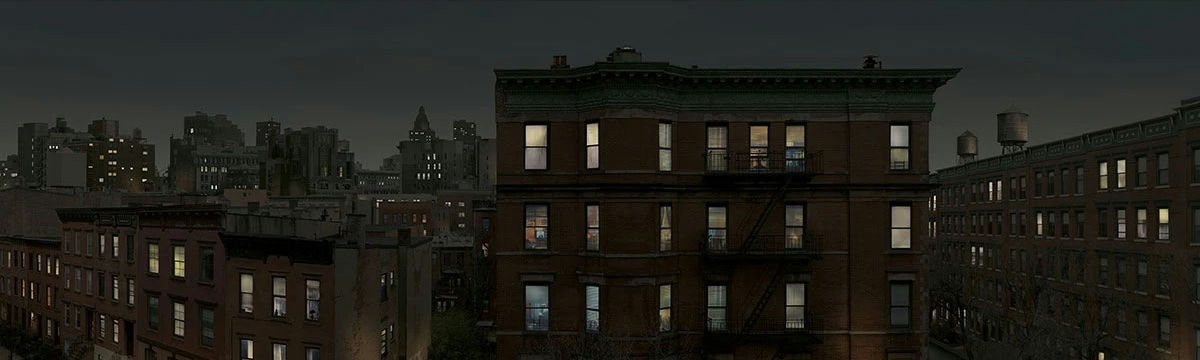
Also, the capabilities that we have to add and remove things in the retouching process, which involves stitching together the images that I, Phil or Sarah Horton have shot, is another thing that production designers are surprised or impressed to see. If it's an urban image, or a city skyline look, we can have lights on in one section and lights off in another section.
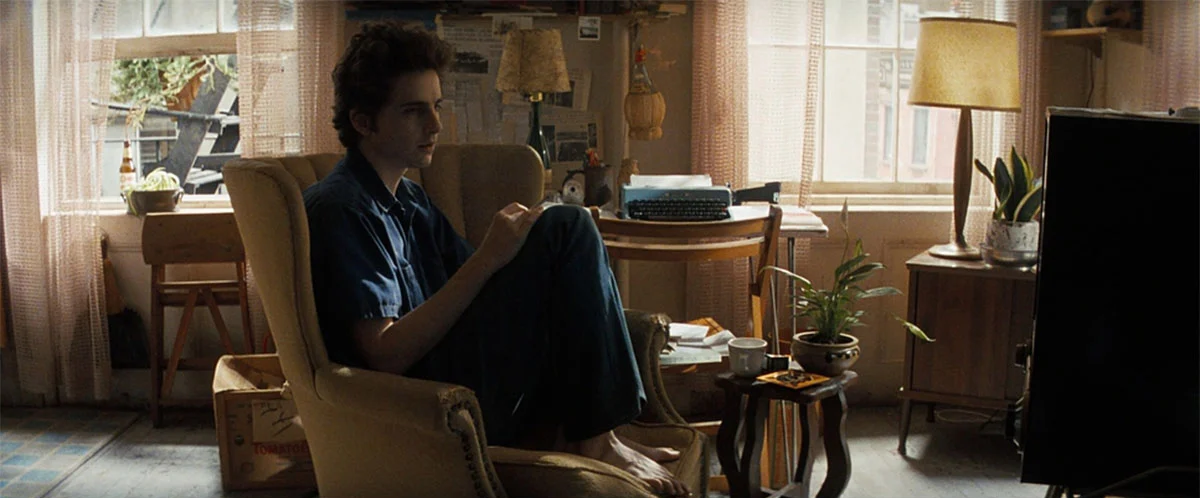
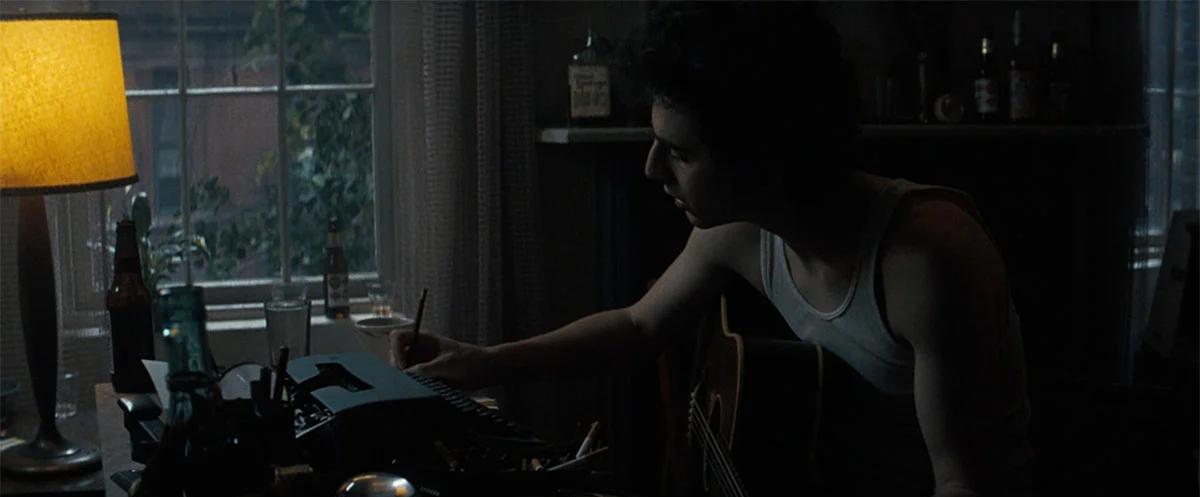
This photo combination shows digital imaging by Phil Greenstreet and production stills from the film A Complete Unknown. From top to bottom: the daytime and nighttime final artwork used to produce a Day/Night SoftDrop backdrop for Bob Dylan's apartment set; actor Timothée Chalamet as Bob Dylan in a daytime apartment scene; and Chalamet as Dylan in a nighttime scene. (Searchlight Pictures/Courtesy of ShotDeck via Rosco Spectrum Blog)
PDC: Are there any memorable installations that stand out to you in your time working with RDI?
Hill: An installation I was fortunate to be on was Highest 2 Lowest by Spike Lee. The production designer was Mark Friedberg and the cinematographer was Matthew Libatique, ASC. This was a unique opportunity for us because they actually used one of our images on a LED wall. To see the versatility that they were able to utilize with the image on the LED wall was fun and educational for me.
PDC: On the collaboration side of working with production designers, what information helps your team deliver the best possible SoftDrop?
Hill: Great reference images before we take those initial pictures that will be the foundation for the drop. If there's somebody in the art department that is photographically-inclined it helps. Or somebody who's willing to come out and talk a little bit about the creative process in a way that reference images may not fully communicate.
PDC: What advice would you give to a designer planning to use a SoftDrop?
Hill: Be as detailed as possible with your reference images, if you have them. Also, ask a lot of questions. We love questions, and we don't shy away from them. We want production designers to be as informed as possible so that they’re comfortable with the drop and confident that they're getting a product that actually works for them.
PDC: What's your favorite thing about helping bring these environments to life?
Hill: I just enjoy the process of collaboration with the art department and being able to come on set and see the final image on the backdrop.
At heart, I'm a problem solver, and I feel like SoftDrops are a great solution to the right creative problems. I love being a part of a team that gets to work on that every day.
I'm looking forward to connecting with folks at the PDC, and if any production designers have questions, they can check in with me at any time.