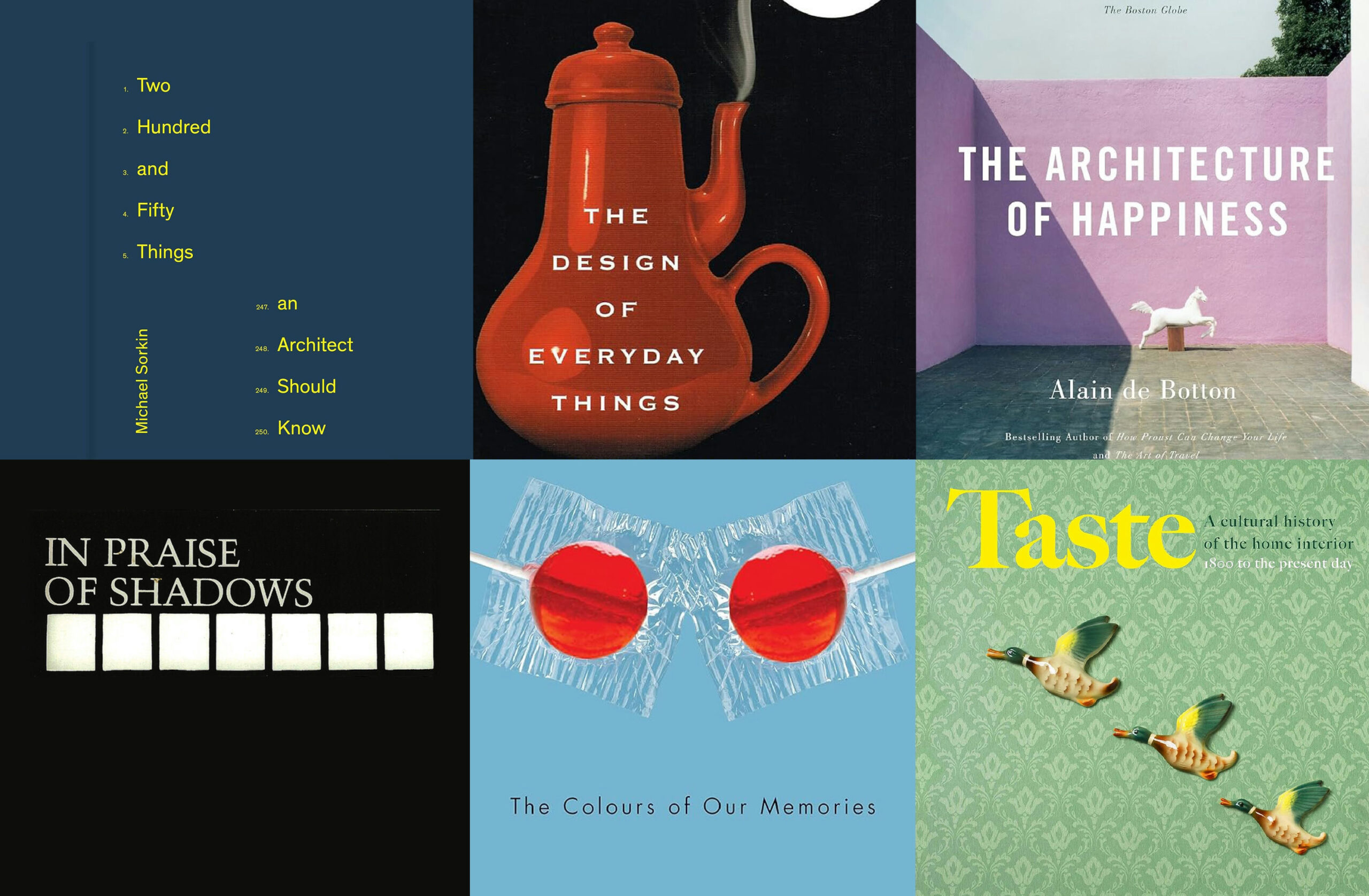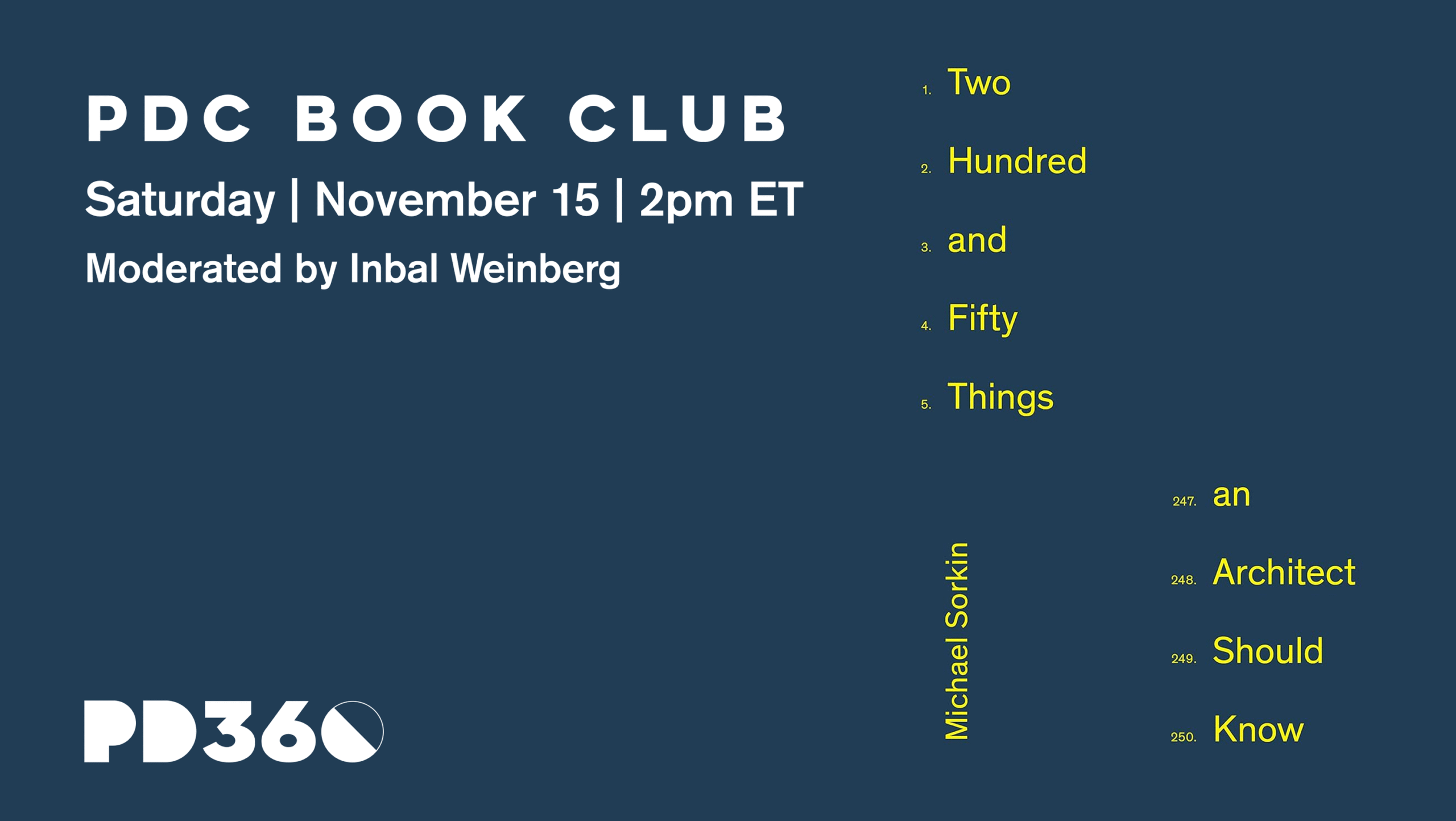
For our first book club meeting, we chose to read 250 Things and Architect Should Know. As production designers, we need to gain knowledge about a variety of diverse subjects. We’re never experts on one topic – we constantly pick up random pieces of information that are essential to the project we’re designing. This book presents a thought-provoking list and a rich starting off point to consider the vast resources helpful to production designers.
We asked our participants to pick list items that resonates with them, and we’re happy to share their thoughts.

1. The feel of cool marble under bare feet
From the first point Sorkin sets the tone in a way that immediately relates to an experience and feeling. This is an emotional way in. I’m already with him there, because I know exactly what that is. And then it opens a door to exploring things that, of course, you don’t know, and connecting you to the more intellectual, academic points of reference. I really thought that was just a brilliant move to connect in a very human way with point number one, and open the door to the rest of it.

2. How to live in a small room with five strangers for six months
3. With the same strangers in a lifeboat for one week
When I read these sentences, my imagination just ignites. I think of how to express the essence of the frustration to be with the strangers, how the little thing would play a role in that small room, or a small boat. What that would be the shape, the architecture. I feel like asking so many questions around that topic in order to create the perfect conditions for certain situations.

8. The number of people with rent subsidies in New York City
43. What the planet can afford
Sometimes when we work in films we can get really disconnected from reality. When we’re representing different levels of wealth in our characters home and belongings, it can get cliched fast… This reminded me of the importance of staying in reality in between projects, because if we start jumping project to project, you can quickly forget about real life, and how relationships work, and how people live… It made me think of politicians that don’t have a clue how much a pint of milk is, or a loaf of bread, because they haven’t bought one for so long. There’s a real world out there that we have to remind ourselves about in between working.

14. How to lay bricks
I think one of the biggest moments in my career was when I decided to go work in another country. I had been working in Spain for 20 years, and everything was very familiar and easy. You know everything – the culture, life, people, crew… Then I was invited to England to design a very British project. And I realized how our perspective of our environment is very personal. For example. the way that British people use brick to build houses is very distinctive. And I didn’t have that knowledge when I arrived there. So I was learning about the color of the brick, how it’s used in Scotland, how it’s used in the north of England, in the south. In Spain we use it in completely different ways.
I think it’s important to have that experience of being an immigrant, because it forces you to realize how much you don’t know. and learning is the best part. I think a designer can sometime even feel like an immigrant in their own country. We travel all the time, face different worlds, and have to stay curious and open to learning.

25. How to sit in a corner
The first thing I thought of when I read this were exterior street corners. Brazil is filled with cheap corner bars. The sidewalk is always very narrow, and all the plastic chairs and tables are on the sidewalk. This corner that should be a passing space is all occupied by people sitting down, grabbing a beer and laughing. You can’t pass there, and there are probably two crosswalks that you can’t really cross. I always think that when you’re designing a place, you should also imagine how people populate it. I really like to observe how things are structured, and how people actually use this structure.

39. What the client wants
40. What the client thinks it wants
41. What the client needs
42. What the client can afford
I often design for commercials, and this sequence really resonated with me. When I work with recurring clients, I can anticipate what they will ask for. I think ahead of them. But It’s always tricky trying to communicate to make sure we are aligned.

74. How the pyramids were built
75. Why
Learning about the pyramids and their significance through school is obviously important, but adding here the “why” made me realize how disconnected we are from this ancient past. We live in this current reality where we’re bombarded with screens, imagery, movies, but in the timeline of human development, it’s been a very short amount of time. We come from a long line of human beings and we stand on their shoulders, so reconnecting with that ancient past is essential.

96. How to get lost
For me, not just how to get lost but how to stay lost. Not let something distract me from it, but to really dive into it, and not worry about anything else that’s going on. Still be aware as to dangers in terms of where you are, but really allow yourself to just go on that free travel… Whether it’s physical, or in a book, or looking at a painting. Just allow yourself that freedom to stay there as long as you need to, to extract what you need.

147. The idea of too far
148. The idea of too close
When I was growing up in a pretty small town in Wisconsin, having my mom drive me 10 minutes to my friend’s house seemed so far. Nowadays if I drive 10 minutes to a friend’s house in New York I consider them my neighbor. I love thinking about these different perspectives. And interpersonally, what does it mean to be really close to somebody, or really far. Especially in our industry which is such a transitory environment. We collaborate closely, then go out of touch. We constantly adapt our relationships and collaborations.

250. The golden and other ratios
I think a lot about aspect ratio in filmmaking. It’s the first thing I notice every time I watch a movie, but it’s also the first thing I ask about when I start collaborating with a cinematographer on a project. Often in all the madness of our work, we don’t have time to delve into the world of cinematography, and we forget how important aspect ratio is for production design.
I had a really interesting experience on one of my last projects, where I worked very closely with the cinematographer. During prep, I got to witness first hand his conversation with the director about aspect ratio and lens choice. We actually shot our camera tests in two different ratios to compare pros and cons. It was so insightful to sit in the screening room and listen to the director and cinematographer talk through the tests. Often production designers are only told of the final decision, and it’s hard to know what was behind it. Being able to sit in the room while options were discussed, made me understand that there isn’t ever a right or wrong decision. It’s what everybody agrees to that is the best for the film.